Phragmites Eradication at Danehy Park
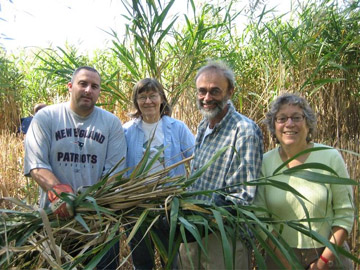 |
Cutting
down phragmites at Danehy Park were from left to right Keith Fay, Danehy
Park site supervisor, Elizabeth Wylde, event organizer, Ted Elliman,
expert on invasive species from the New England Wildflower Society and
City Councillor Henrietta Davis.
There was an
unusual sight at Danehy Park last week. Dwarfed by giant plants towering
six feet over their heads, about twenty people were pushing their way
into the dense wetland near Sherman Street to cut down phragmites, an
invasive plant and the enemy of the native cattail. In the warm fall
sun, the people resembled gleaners from an Impressionist painting.
They were instead
volunteers and city staff and part of the first-ever phragmites eradication
event. Organized by Elizabeth Wylde, a Cambridge resident who is coordinator
of the Friends of the Fresh Pond Reservation, the event was attended
by many people who responded to her call for help. In addition to about
a dozen volunteers, including Cambridge City Councillor Henrietta Davis,
there were three licensed pesticide applicators and six Danehy Park
employees led by Keith Fay, the Danehy Park site supervisor. They converged
on the wetland wildlife area at Danehy that is being choked by invasive
phragmites, a giant grass with a feathery plume on top which forces
out native species such as cattails and other wetland plants, depriving
birds and wildlife of needed food.
When a friend asked why nothing was being done about the phragmites at Danehy Park's wetland I wondered if I could do something about it and I'm elated with the result," said Ms. Wylde. "The response to my call for help was very positive and I was especially moved by Ted Elliman's generosity in volunteering to lead our effort," Ms. Wylde said. Elliman is Vegetative Management Coordinator and IPANE Volunteer Coordinator for the New England Wildflower Society and a specialist in invasive species. The group was also assisted by Vince Falcione, the site supervisor of the Fresh Pond Reservation who volunteered his time to be a licensed pesticide applicator.
Councillor Davis said about the effort: "Elizabeth and her band
of volunteers have started an effort that may take several years to
complete but I know they will bring the cattails back to Danehy. They
are to be commended."
The group used garden pruners to cut off the tops of the phragmites. Then the applicators dripped a small amount of a blue-colored wetland-approved herbicide called Rodeo (glyphosate) into the hollow stems. The poison traveled down the stem to kill the grasses without harming any other plants or animals. "This is what we're protecting," Keith Fay noted as he displayed a cattail in the midst of the phragmites.
Henrietta Davis
Cambridge City Councillor
120 Chestnut St
Cambridge, MA 02139617-547-0877
henrietta@henriettadavis.org